What Are the Different Types of Mold in Bon Air Homes?
The name of the mold matters less than you'd think. Where it grows and why it is there tells you far more.
What are the different types of mold?
There are thousands of mold species, but most homes see the same handful: Cladosporium, Penicillium, Aspergillus, Alternaria, Stachybotrys (the one called black mold), Chaetomium and a few others. All of them need moisture to grow. The type helps explain what got wet and for how long, but the fix always starts with the water.
The molds we find most often inside homes
Mold spores float in every house. They only become a problem when they land on something damp and stay there. Here are the ones we run into most, and the places they like.
Each of these can show up in more than one color. Green, gray, black and white all appear across species, so color alone won't tell you what you have.
- Cladosporium: dark green or black spots on bathroom grout, window frames, the back of carpets and around HVAC vents. It handles cooler spots better than most molds.
- Penicillium: blue-green and fuzzy. It spreads fast on wet drywall, carpet pad and stored boxes after a leak.
- Aspergillus: a large family in many colors. Common on drywall, insulation and dust in damp rooms.
- Alternaria: dark and velvety. Often found under sinks, around showers and near windows that collect condensation.
- Stachybotrys chartarum: slimy, very dark green to black. It needs material that has stayed wet for days, like soaked drywall paper, ceiling tiles or wood behind a slow leak.
- Chaetomium: starts white and turns gray or brown. Shows up on drywall and wood after water damage that wasn't dried well.
Is black mold worse than other kinds?
Stachybotrys gets the headlines because some strains can produce mycotoxins. That is a fair reason to take it seriously. But plenty of dark molds are not Stachybotrys, and lighter molds like Aspergillus and Penicillium can also bother people with allergies or asthma.
People sometimes sort molds into three loose groups. Allergenic molds can trigger sneezing and itchy eyes. Pathogenic molds can cause infections in people with weak immune systems. Toxigenic molds can produce toxins. Many species fall into more than one group, and how a person reacts varies a lot.
So we treat any mold growth larger than a small spot as something to handle with care. We contain the area, run air filtration and remove what can't be cleaned. The plan does not change much based on the name.
What the type of mold tells you about the water
This is where knowing the type actually helps. Stachybotrys and Chaetomium point to material that stayed wet for a long time. That usually means a hidden leak, a slow drip in a wall or flooring that never fully dried after an earlier problem.
Cladosporium and Alternaria near windows and bathrooms tend to mean humidity and condensation rather than a leak. In the Richmond area, long humid summers make crawl spaces and basements prime spots for this kind of growth, especially when vents are blocked or a dehumidifier isn't running.
Penicillium and Aspergillus popping up quickly after a burst pipe tell you the room got wet recently and wasn't dried fast enough. That is why our drying and dehumidifying work matters so much in the first couple of days.
Do you need to test to find out the type?
Usually not. If you can see mold and you know there was water, the cleanup steps are the same no matter the species. Testing costs money and time, and it rarely changes what has to be removed.
Testing can make sense in a few cases. You smell mold but can't find it. Someone in your home has health concerns and a doctor wants to know more. Or you're buying or selling a house and need paperwork. We'll tell you plainly if we think a test is worth it for your situation.
Why fixing the cause costs less over time
Spraying bleach on a moldy wall is cheap today. It also tends to come back, because bleach doesn't reach roots in porous drywall and it doesn't touch the leak behind it. Every round of regrowth damages more material.
Finding the moisture source, cutting out what's ruined and drying the framing costs more up front. But it ends the cycle. Over a few years that usually means fewer repairs, cleaner air and no surprise when you pull up flooring later.
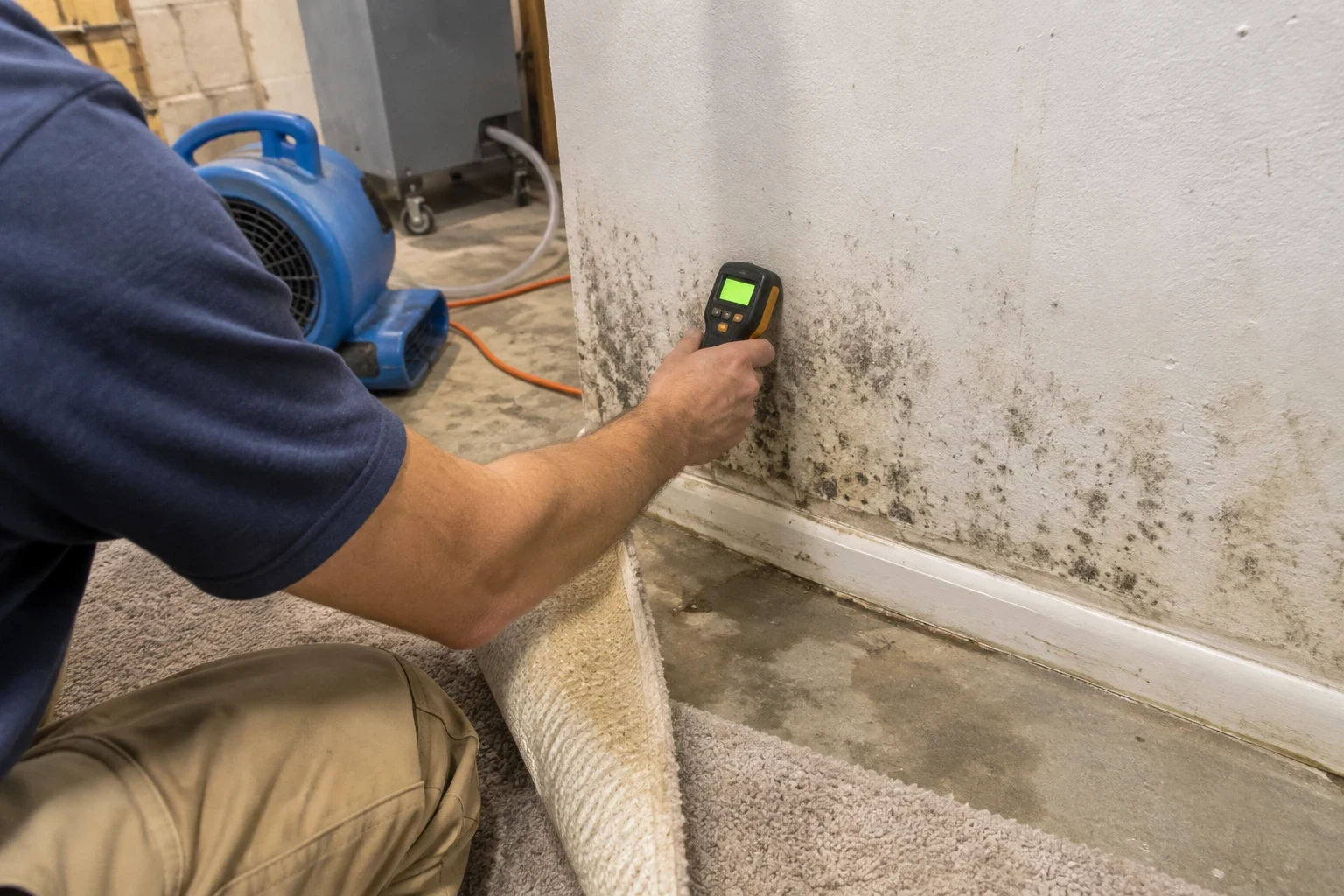
When we do mold remediation, we show you what we found and explain the repair-or-replace choice for each area. If drywall or trim has to come out, our repairs and rebuild crew puts it back once the space tests dry.
- Find and stop the water source first
- Contain the work area so spores don't travel
- Remove porous material that can't be cleaned
- Clean and dry framing, then confirm it's dry before rebuilding
More questions about household mold
Something not covered here? (804) 392-1073
Can I clean a small spot of mold myself?
A small patch on a hard surface, like shower tile, can usually be cleaned with soap and water and a scrub brush. Wear gloves and keep the room ventilated. If it keeps coming back or covers a large area, there's moisture you're not seeing.
Why does mold smell musty?
Growing mold gives off gases as it feeds. That musty smell often shows up before you see anything, and it's a good sign something behind a wall or under a floor is staying wet.
Will my insurance cover mold removal?
It depends on your policy and what caused the water. Mold from a sudden pipe burst is treated differently than mold from a long-term leak. We work with most major insurance companies and can walk you through what to document.
How fast does mold start growing after a leak?
Mold can start growing on wet material within a day or two. That's why fast water extraction and drying matter so much.
Found mold or a musty smell?
Pick up the phone and we'll come look. You get a free on-site inspection, a straight answer on what's causing it and a clear plan for removing it. If water is still coming in, we handle emergency water damage response too.