ServicesFlood Cleanup
Flood Cleanup in Bon Air
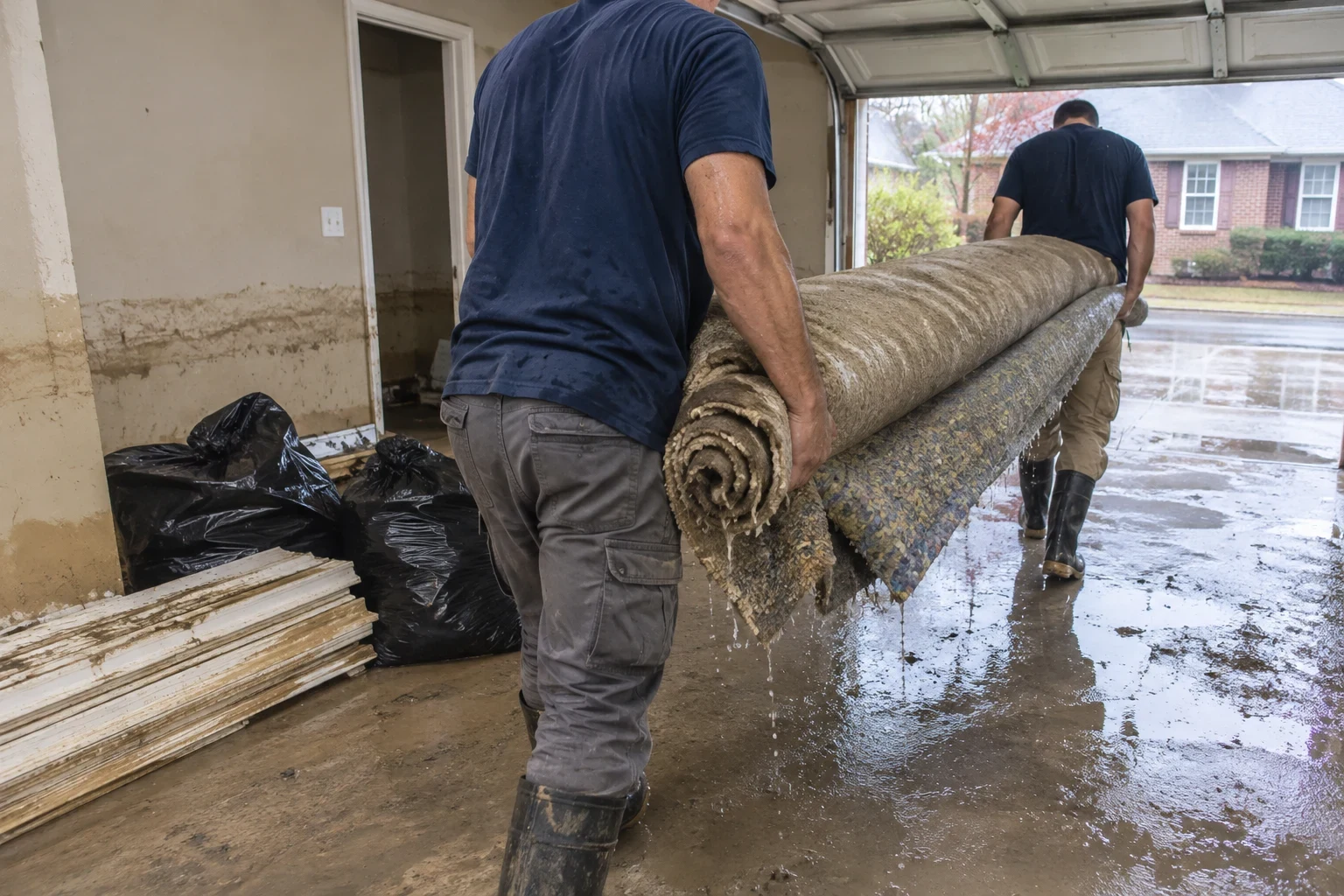
When outside water gets into your home, it brings mud, silt and bacteria with it. We pump it out, cut away what can't be saved, clean what can, and dry the structure so the repairs you pay for later don't fail.
What flood cleanup covers and when you need it
Flood cleanup is for water that came from outside: a creek over its banks, storm runoff through a basement door, groundwater pushing up through a slab or into a crawlspace. That water is dirty. It carries soil, lawn chemicals and sometimes sewage from overwhelmed lines, so the job is more than drying. Drywall, insulation and carpet pad that sat in it usually have to go.
We weigh each choice by what it costs you over the next several years, not just this week. Saving a soaked carpet pad trims today's bill, but it holds contamination and smell. Cutting drywall a little above the waterline costs a bit more now and keeps mold out of the wall cavity later. We tell you which is which, and why.
If the water came from a burst pipe or an appliance inside the house, our Water Extraction page is a closer fit. If sewage backed up through your drains, see Sewage Cleanup.
What the work includes
- Pumping and extraction
- We remove standing water with pumps, then go over floors with extraction tools to pull water out of carpet and subfloor. The less water left behind, the shorter the drying and the less you replace.
- Mud and silt removal
- Floodwater leaves silt on floors, in vent openings and along the bottom of walls. We shovel and squeegee it out and wash surfaces down before drying starts.
- Flood cuts and tear-out
- We cut drywall in a straight line above the wet mark and pull insulation, baseboard and pad that soaked up dirty water. A clean, level cut makes the rebuild simpler and cheaper.
- Cleaning and antimicrobial treatment
- Studs, slabs, joists and anything worth saving get cleaned and treated. This is the step that keeps a flooded basement from smelling for years.
- Structural drying
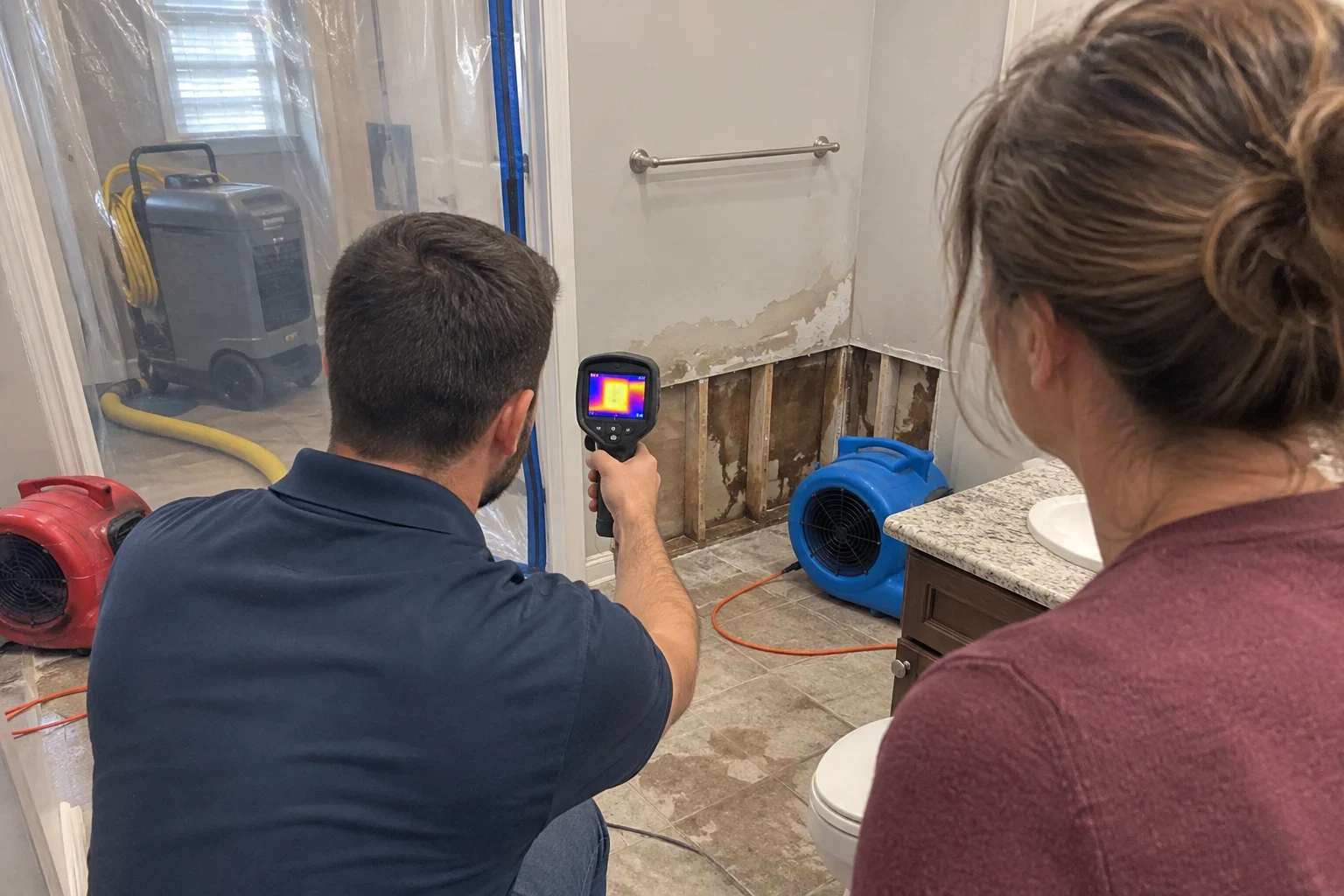
- We set air movers and dehumidifiers and check moisture readings until framing and subfloor are back to normal. Our Drying and Dehumidifying page explains that part in more detail.
- Photos and records for your claim
- We photograph the damage, log moisture readings and list everything we remove. We work with most major insurance companies, and these records help your adjuster see what happened.
Signs you need flood cleanup
Water came in from outside
Water through a basement window well, under a door or up through a floor drain during a storm should be treated as dirty, even if it looks clear.
A brown line on the walls
A tide mark on drywall or paneling means the material wicked up floodwater. Paint over it and the stain comes back, along with the smell.
Musty smell a day or two later
That earthy odor is microbes growing in wet materials. Something under the surface is still wet.
Soaked crawlspace or insulation
Wet batts hanging under the floor or puddles on the vapor barrier will rot sill plates and joists if left alone. Central Virginia's humid summers speed that up.
Warped floors or hollow tile
Cupped hardwood, bubbled laminate or tile that sounds hollow when tapped means water got underneath.
How a flood cleanup job runs
- 1
You call, we head out
Tell us where the water is and how deep. We take flood calls around the clock, and we're on site in 60 mins or less.
- 2
Walkthrough and a plan
We check that power is safe, find where water came in and take moisture readings. Before any tear-out, you get a plain explanation of what has to go, what can be saved and the cost tradeoffs of each.
- 3
Water, mud and wet materials out
We pump and extract, clear the silt, make the flood cuts and haul out soaked materials. We protect the dry parts of your home as we work.
- 4
Clean, treat and dry
Every exposed surface gets cleaned and treated. We come back to take readings and adjust equipment until the numbers say it's dry.
- 5
Ready for repairs
Once it's dry, we go over what needs rebuilding. Our Repairs and Rebuild crew can put back drywall, trim and flooring, or you can hand our records to your own contractor.
What moves the cost of flood cleanup
No two floods cost the same, and we won't guess a number over the phone. After the walkthrough you get a written, line-item estimate. The cheapest version of this job is often the most expensive one a couple of years later, so we point out where spending a little more now saves on repairs down the road.
- How much area got wet
- A corner of a basement is a smaller job than a whole lower level. Square footage drives labor, equipment count and disposal.
- Water depth and how long it sat
- Two inches for a few hours is different from a foot that sat for two days. Longer soaking means higher cuts, more material out and longer drying.
- What the floors and walls are made of
- Concrete and tile clean up well. Carpet, pad, particleboard and paneling soak up contamination and usually get replaced.
- Contents and access
- A finished basement full of furniture and storage takes longer than an open crawlspace. Moving and protecting your belongings adds hours.
- Hidden damage
- Sometimes we open a wall and find old rot or mold. We show you photos and talk it through before adding any work.
Flood cleanup questions
Something not covered here? (804) 392-1073
Does homeowners insurance cover flood cleanup?
It depends on where the water came from. Many standard homeowners policies exclude rising water from outside, which is usually covered by a separate flood policy. Water from a broken pipe is often handled differently. We work with most major insurance companies and give you photos and moisture logs, but your adjuster makes the coverage call.
Can I clean it up myself?
A little clear water, maybe. Floodwater from outside is a health risk, and a shop vac won't dry wall cavities or subfloor. If you start before we arrive, wear gloves and boots, keep power off in wet areas and take photos first.
Do you have to tear out my drywall?
Usually some of it. Drywall that soaked up floodwater holds bacteria and won't dry properly inside the wall. We cut just above the waterline, not the whole wall, which keeps the rebuild smaller.
How long does it take to dry?
Many homes dry in several days once wet materials are out, but dense wood and crawlspaces can take longer. We go by moisture readings, not the calendar.
Will I get mold afterward?
Mold needs moisture and time. Getting the water and wet materials out fast and drying to normal readings is the best defense. If growth has already started, our Mold Remediation service handles it.
Can we stay in the house during the work?
Often, if the water stayed in a basement or crawlspace and the power is safe. The drying equipment runs day and night and it's loud. If water reached living areas or sewage was involved, staying elsewhere for a few days is the safer choice.
Water in the basement? Let's get it out.
We come out any hour, pump it out and tell you plainly what it will take to fix it right. The on-site inspection is free.