ServicesDrying and Dehumidifying
Drying and Dehumidifying in Bon Air
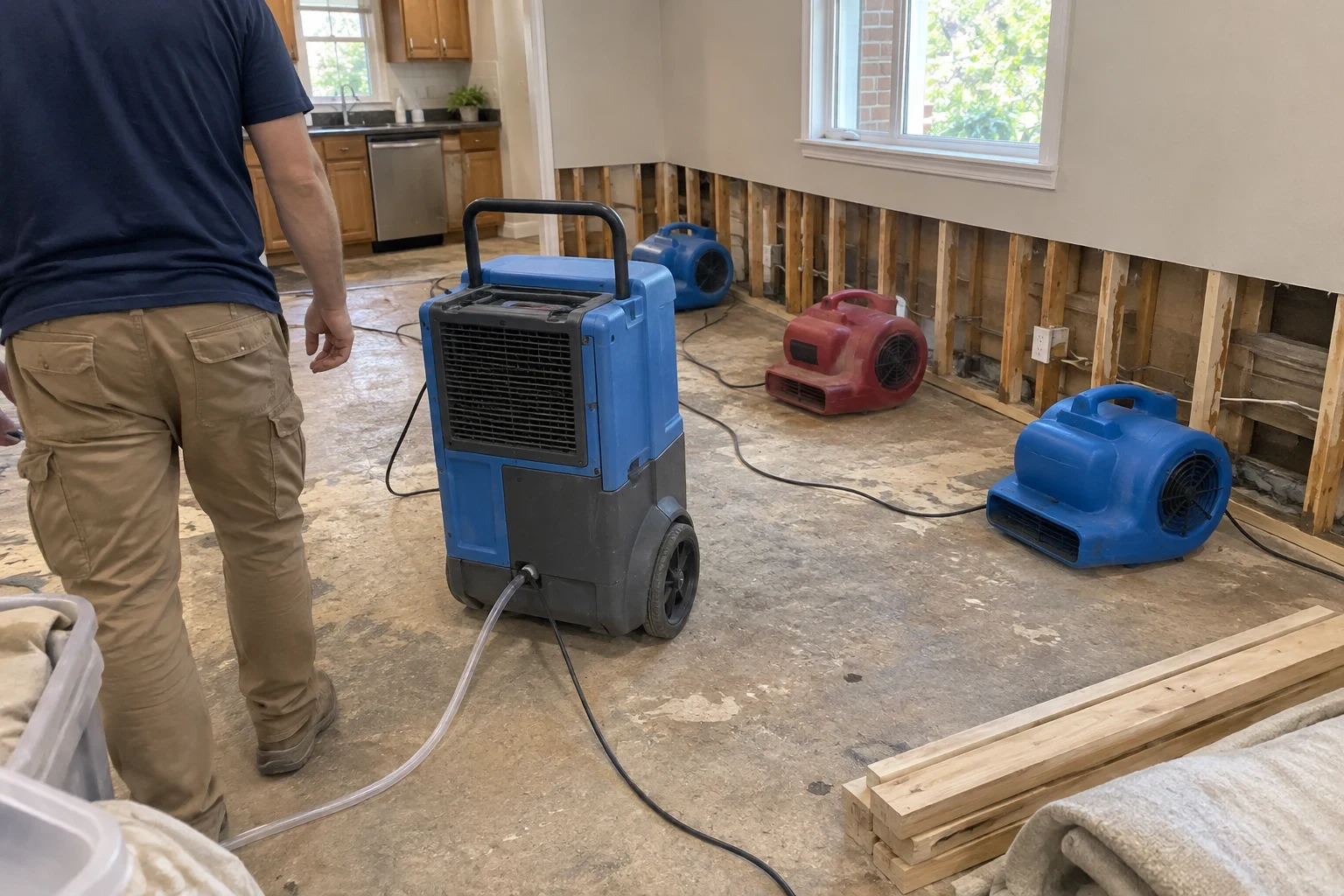
Once the standing water is gone, the real work starts. Water hides in drywall, subfloor, framing and carpet pad. We set up drying equipment, check moisture every day and leave only when the readings say your home is dry, not when it looks dry.
Why drying is the step that decides the cost
Wet materials keep soaking up water after a leak stops. Drywall wicks it upward. Wood floors pull it in from below and start to cup. Insulation holds it like a sponge. If that moisture stays, you end up paying twice: once for the leak, and again for mold, warped floors or soft drywall a few months later.
Good drying costs less than tear-out. In many cases we can save drywall, cabinets and hardwood that would otherwise be thrown away. When something cannot be saved, we tell you plainly and show you the reading that proves it. That way your money goes to the fix that lasts, not to the cheapest quick job.
Drying usually follows water extraction. If the water is still on the floor, we pull it out first, then set up the drying equipment the same visit.
What our drying work includes
Moisture mapping
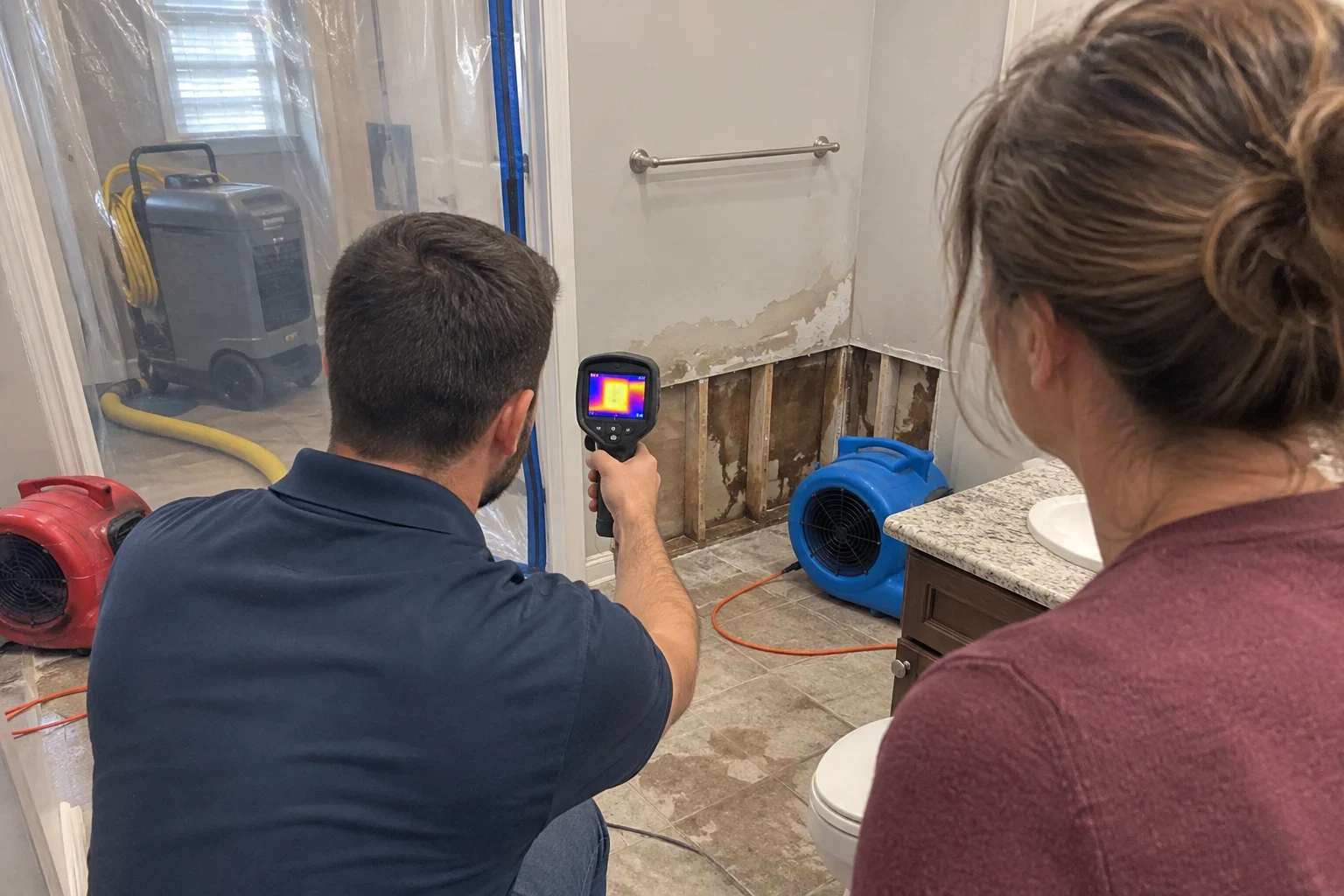
We use moisture meters and thermal imaging to find where the water went. That includes inside walls, under flooring and below cabinets. We mark the wet areas and photograph them for your records.
Air movers placed with a plan
Fans go where they move air across wet surfaces, not just in the middle of the room. We angle them along walls and under toe kicks so the drying is even.
Commercial dehumidifiers
Air movers pull water out of materials and into the air. Dehumidifiers take it out of the air so it does not settle back in. We size the units to the room and how wet it is.
Wall and cavity drying
When water gets behind drywall, we can often dry the cavity through small holes near the baseboard instead of cutting out whole sheets. Less demolition means a smaller repair bill afterward.
Hardwood and subfloor drying
Wood floors need slow, controlled drying or they crack. We use floor drying mats when they fit the job and track the readings closely until the boards settle.
Daily checks and a written record
We come back each day to take readings and adjust the equipment. You get a log of the numbers, which also helps if you file an insurance claim.
Signs your home still needs drying
- Musty smell that will not go away
- A damp, earthy smell days after a leak means moisture is still trapped somewhere. That is often the first step toward mold.
- Baseboards or drywall feel soft
- Press near the floor. If the wall gives, bubbles or shows a water line, the inside of that wall is still wet.
- Floors cupping or lifting
- Hardwood edges that rise or vinyl that bubbles means water is under the surface. Waiting usually makes it worse.
- Damp air in the basement or crawlspace
- Sticky air, condensation on pipes or fogged windows mean the space is holding moisture. Our humid summers make this hard to clear without equipment.
- You dried it with house fans
- Box fans dry the surface but rarely the framing or pad underneath. If you have not taken moisture readings, you do not know if it is dry.
How a drying job runs
- 1
Inspect and measure
We walk the wet area with you, take readings and check dry rooms too, so we know what normal looks like for your home. Then we explain what we found and what we plan to do.
- 2
Remove what cannot dry
Soaked carpet pad and wet insulation usually have to go. We pull only what the readings and the material call for, and we tell you before anything is removed.
- 3
Set up the equipment
Air movers and dehumidifiers go in, and we protect floors and furniture around them. We show you which outlets we are using and what to leave running.
- 4
Check every day
We return daily to take readings, move fans and empty or adjust units. Most rooms dry in a few days, though thick wood and plaster can take longer.
- 5
Confirm dry and hand off
When the readings match the dry areas of your home, we pull the equipment and give you the moisture log. If repairs are needed, our repairs and rebuild crew can pick up from there.
What moves the price of drying
Drying is priced by how much is wet, what it is made of and how long the equipment runs. We give you a written estimate after the inspection, broken out by line, so you can see where the money goes. We work with most major insurance companies and can explain how the claim side usually works.
- How much area got wet
- One bathroom takes a few machines. A finished basement or several rooms takes many more, and more days of checks.
- What the materials are
- Carpet and drywall dry faster than hardwood, plaster or tile over a wood subfloor. Dense materials need more time on the equipment.
- How long the water sat
- Water that soaked in for days goes deeper than water caught right away. Fast action usually means a shorter drying job and less tear-out.
- Clean or dirty water
- A supply line leak is clean water. Groundwater or a sewer backup needs extra cleaning and removal before drying, which adds cost. That work falls under flood cleanup or sewage cleanup.
Drying and dehumidifying questions
- How long will the fans and dehumidifiers be in my home?
- Most jobs run three to five days. Hardwood, plaster and crawlspaces can take longer. We decide when to pull the equipment by the moisture readings, not by the calendar.
- Can I turn the equipment off at night because of the noise?
- Please leave it running. Turning it off lets moisture settle back into the materials and stretches the job out. If a unit is near a bedroom, we can often move it or swap in a quieter setup.
- Will it run up my electric bill?
- Some, yes. The machines draw steady power for a few days. We can note the equipment and run time in your records, since some insurance policies cover the added electric use.
- Do you have to cut out my drywall?
- Not always. If the drywall is sound and the water was clean, we can often dry the wall cavity in place. If it is crumbling, stained deep or was hit by dirty water, cutting the bottom section out is the better long-term choice.
- How fast can you get here?
- Our offer is on site in 60 mins or less. Water damage gets worse by the hour, so the sooner the equipment is running, the more we can usually save.
- What if mold has already started?
- We will tell you what we see during the inspection. Small spots can sometimes be handled during drying. Larger growth needs mold remediation first, so drying does not spread spores around the house.
Get the moisture out before it costs more
Wet framing and floors do not fix themselves. We will come out, take readings and tell you honestly what needs drying and what needs replacing. We serve Bon Air, Midlothian, Tuckahoe and nearby.