ServicesWater Extraction
Water Extraction in Bon Air
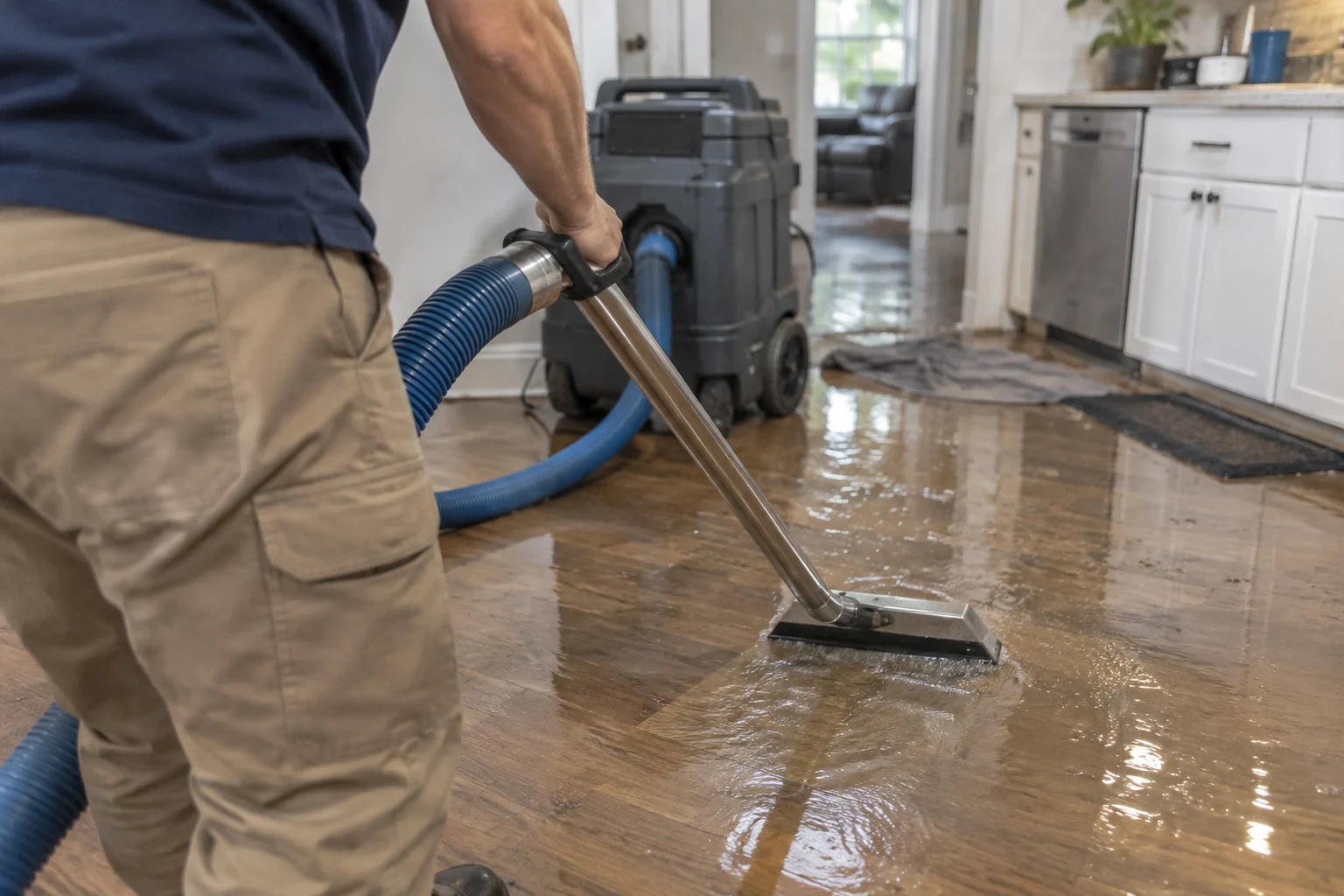
When water is standing in your home, every hour it sits soaks deeper into carpet pad, subfloor and drywall. We bring truck-mounted and portable extraction gear, pull the water out, and show you what can be saved before anything gets torn out.
Why Getting the Water Out First Matters
Extraction is the first real step after a leak, burst pipe or flooded basement. We remove the liquid water with pumps and wand vacuums so the drying equipment has less to do. A dehumidifier pulls moisture out of the air slowly. An extraction wand pulls gallons out of a carpet in minutes.
This is where the money gets saved or lost. A good extraction job can mean the difference between drying carpet in place and paying to replace it, or cutting a few inches of drywall instead of a full wall. A rushed job leaves water in the pad and under the floor, and that water shows up later as cupped hardwood, odor or mold.
We are on site in 60 mins or less, and we work with most major insurance companies. Once the water is out, we move straight into drying and dehumidifying so nothing sits wet.
What Our Water Extraction Covers
Standing water removal
Submersible pumps for deep water in basements and crawl spaces. Wet vacuums for the inches left behind on hard floors.
Carpet and pad extraction
We use weighted extraction tools that press down on the carpet and pull water out of the pad underneath. If the pad is too far gone, we tell you, pull it, and try to save the carpet itself.
Moisture mapping
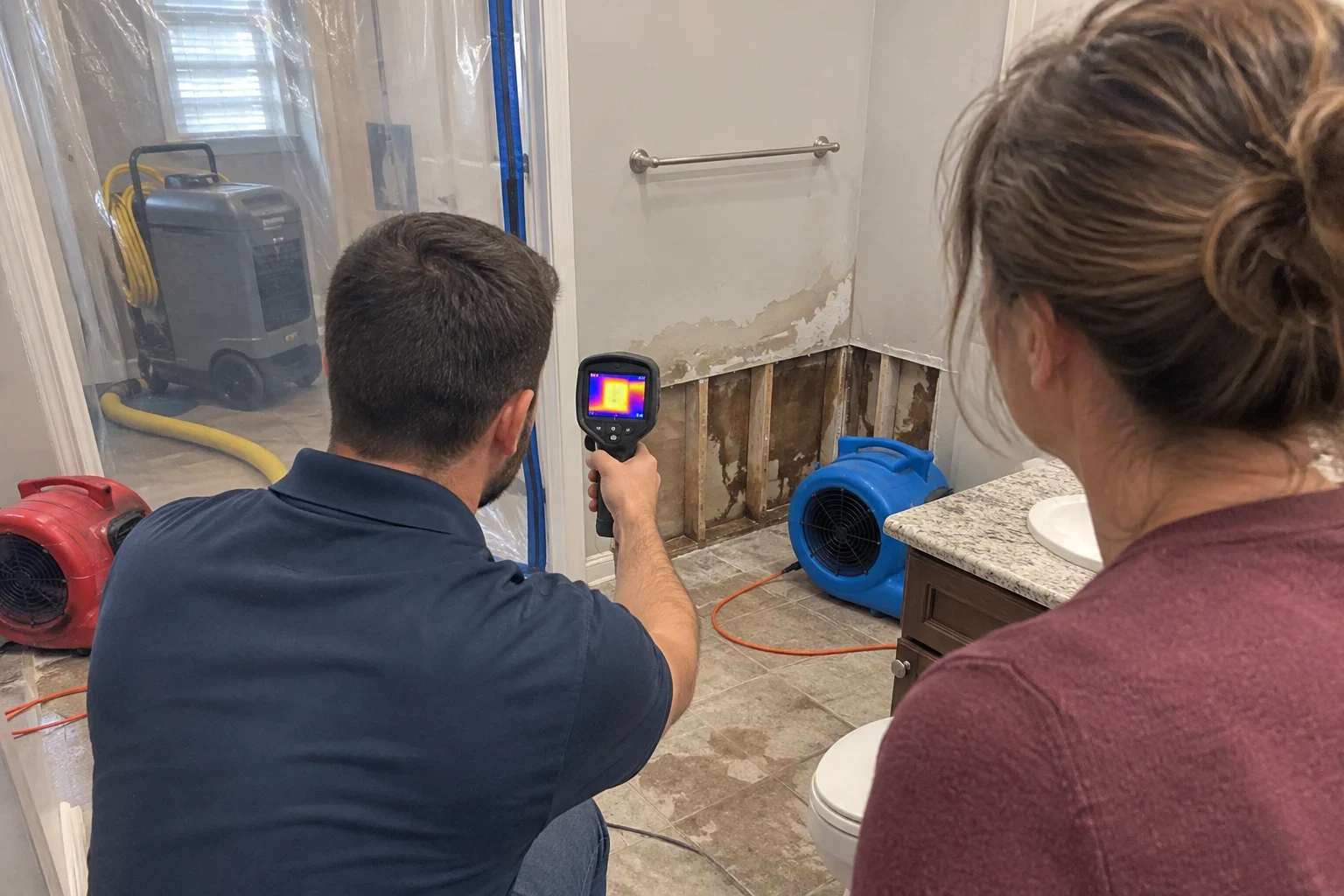
Before and after extraction we check walls, baseboards and subfloor with moisture meters and a thermal camera. That shows where water traveled that you cannot see, so we are not guessing about what to open up.
Moving and blocking contents
We move furniture off wet floors and set legs on blocks or foam so stains and rust do not bleed into the carpet.
Photos for your claim
We photograph the water, the source and the damage as we go. You get pictures your insurance adjuster can use, and we explain how the claim process usually works without acting as the adjuster.
Signs You Need Water Extraction
- Water you can see on the floor
- Any standing water, even a thin film across a kitchen or basement floor, should be pulled up right away. It keeps spreading under baseboards and cabinets while it sits.
- Carpet that squishes
- If carpet feels damp or water rises when you step on it, the pad is saturated. Towels and a shop vac will not reach it.
- A wet crawl space or basement
- Older homes around the area often have crawl spaces and block basements that collect water after heavy summer storms. Water left under the house raises humidity in every room above it.
- A burst pipe or failed appliance
- Supply lines, water heaters and washing machine hoses can dump a lot of water fast. Shut the water off at the main, then get extraction started.
- Swelling baseboards or a musty smell
- These mean water has been sitting longer than you thought. Extraction and drying now still costs far less than tear-out later.
How an Extraction Job Runs
- 1
You call, we come out
Tell us what happened and where the water is. We ask whether the main is off and if any outlets are near the water, then head your way.
- 2
Stop the source and check safety
We confirm the leak is stopped and check for electrical hazards. We also look at what kind of water it is. Clean supply water is handled differently than storm or sewer water.
- 3
Extract and measure
We pump and vacuum until no more water comes up, then take meter readings in floors and walls. We walk you through what can dry in place and what has to come out, with photos.
- 4
Set up drying
Air movers and dehumidifiers go in the same visit. We come back to check readings until everything reaches a dry standard, and we tell you if repairs and rebuild work will be needed.
What Changes the Cost of Water Extraction
We give you a free on-site inspection and a written estimate broken out line by line. The price depends on how much water there is and how far it spread, not on a flat guess over the phone. Spending a little more on thorough extraction usually saves more than it costs, because every gallon left behind adds days of drying and more material to replace.
- Square footage and depth
- A wet laundry room is a smaller job than a basement with two inches of water across it. More area means more equipment and more time.
- Type of water
- Clean water from a supply line is the simplest case. Storm water or anything that touched soil needs more careful handling, and sewage cleanup is a separate service with its own steps.
- Flooring and materials
- Carpet with pad, laminate, hardwood and tile all take water differently. Laminate and some engineered floors often cannot be saved, while solid hardwood sometimes can if we get to it quickly.
- Access
- Tight crawl spaces, finished basements and water trapped under cabinets take more labor than an open floor.
- How long the water sat
- Water that has been sitting a day or two has soaked further and may need some removal of wet materials before drying can work.
Water Extraction Questions
- What should I do before you get here?
- Shut off the water at the main if the source is a pipe or appliance. Stay out of standing water if any outlets or cords are near it, and turn off power to that area only if you can reach the panel safely. Move small valuables and papers up off the floor. Leave the rest to us.
- Can my carpet be saved?
- Often, yes, if the water is clean and we get to it early. The pad underneath is usually the part that gets replaced because it holds water like a sponge and is cheap compared to carpet. If the water came from outside or a sewer line, carpet and pad generally have to go for health reasons.
- How long does extraction take?
- Most single-room jobs take a few hours. A flooded basement or crawl space can take most of a day. Drying afterward usually runs several days, and we check readings along the way rather than guessing when it is done.
- Will my homeowners insurance cover this?
- It depends on your policy and what caused the water. Sudden events like a burst pipe are often covered, while slow leaks and outside flooding may not be. We work with most major insurance companies, and we document everything with photos and readings so your adjuster has what they need.
- Can I just use a shop vac and fans?
- For a small spill on tile, maybe. A shop vac cannot pull water out of carpet pad, wall cavities or subfloor, and fans alone can spread humidity through the house. Water left behind is what turns a cheap fix into mold remediation later.
Get the Water Out Before It Spreads
The sooner the water comes up, the more of your floors and walls stay in place. We are on site in 60 mins or less across Bon Air, Richmond, Midlothian and nearby.