ServicesMold Remediation
Mold Remediation in Bon Air
Mold grows where water sits. We find the source, seal off the area, take out what can't be saved and clean what can. Then we dry it all and prove it with moisture readings. Paying once beats paying for the same cleanup next spring.
Removing mold and the reason it grew
Mold needs three things: moisture, something to eat like drywall paper or wood, and a little time. Take away the moisture and it stops growing. Leave the moisture and any cleanup is temporary.
That is why we don't just spray and wipe. A cheap surface treatment looks fine for a few months, then the spots come back through the paint. We spend the time up front on the leak, the humidity or the poor airflow behind it. That costs a bit more on day one and a lot less over the life of your home.
Small spots on a bathroom ceiling, smaller than a bath towel, you can often clean yourself with detergent and water. Larger patches, mold inside walls, or growth after a leak or flood is when it makes sense to call us.
What our mold remediation includes
- 01
Moisture source check
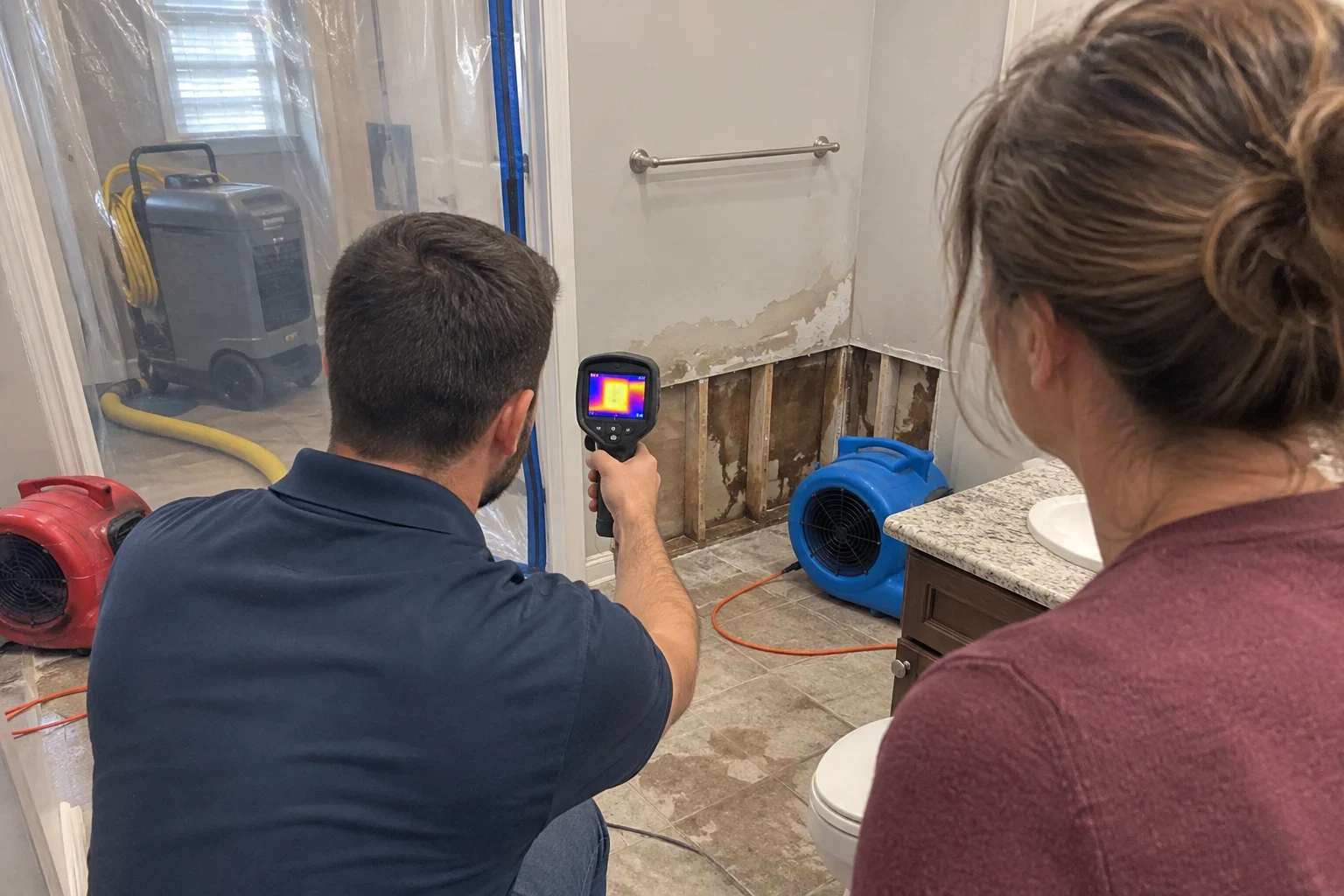
We use moisture meters and a thermal camera to trace where the water is coming from. It might be a slow supply line leak, a sweating duct or a wet crawl space. We show you what we find.
- 02
Containment
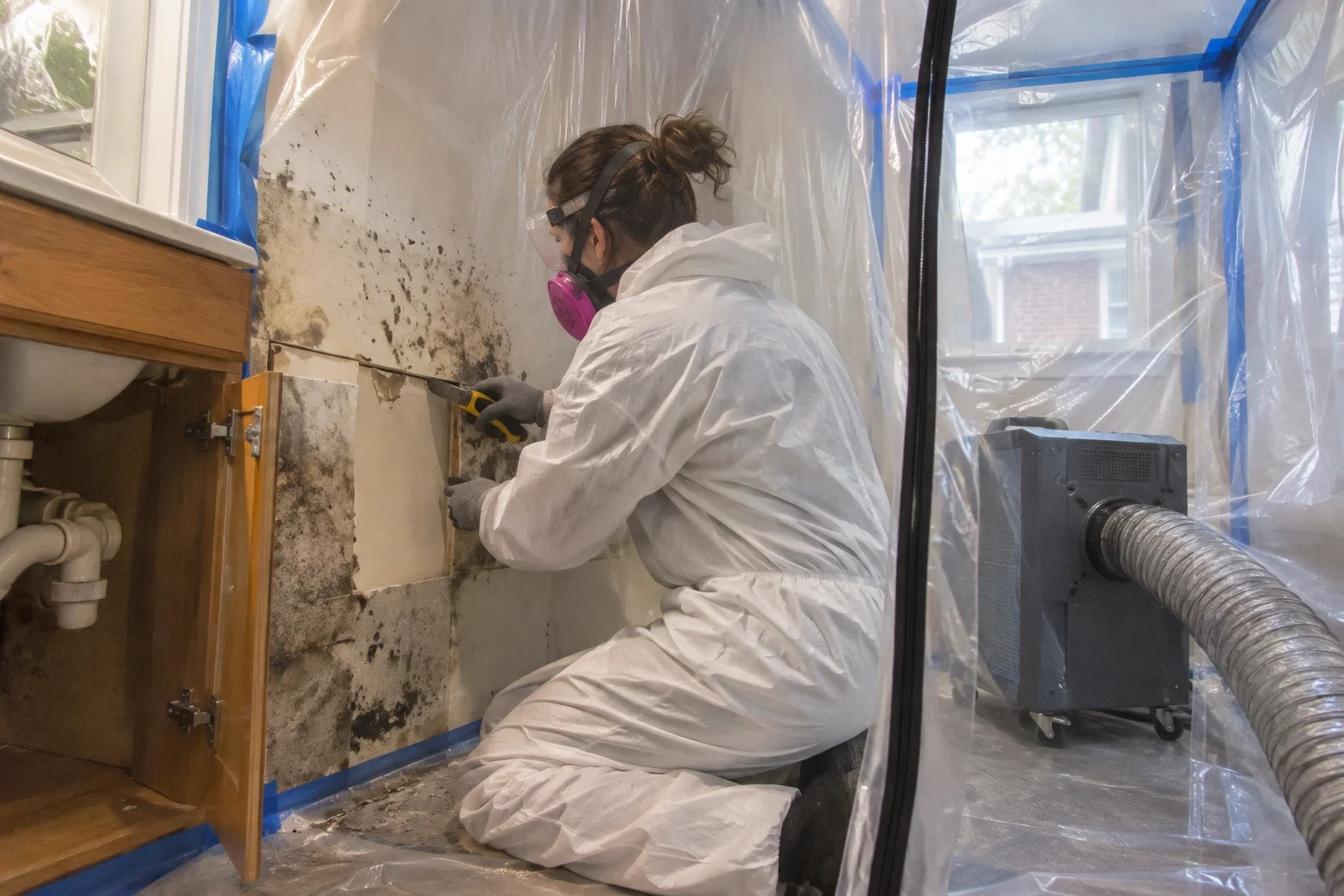
We seal the work area with plastic sheeting and run HEPA air scrubbers under negative pressure. That keeps spores from drifting into clean rooms while we work.
- 03
Removing what can't be saved
Moldy drywall, insulation and carpet pad get cut out and bagged. We cut past the visible growth so hidden mold at the edges doesn't get left behind.
- 04
Cleaning framing and hard surfaces
Studs, subfloor and joists usually stay. We HEPA vacuum them, scrub or sand off growth, and apply an antimicrobial treatment.
- 05
Drying and final readings
We dry the area to normal moisture levels before anything gets closed up. Our drying and dehumidifying work handles this step, and we give you the readings.
Questions about Mold Remediation?
Call(804) 392-1073Signs you may need mold remediation
A musty smell that won't clear
An earthy smell in a closet, basement or under a sink often means growth you can't see yet. Air fresheners won't fix it.
Spots that come back after cleaning
If you bleach a patch and it returns in a few weeks, the roots are in the material and the moisture is still there.
Stains or bubbling paint
Brown rings on a ceiling or paint lifting off a wall mean water got in. Mold often follows behind it.
A leak that sat for more than a day or two
Mold can start on wet drywall within a couple of days. If a leak went unnoticed, it's worth a look even if nothing shows yet.
Damp crawl space or basement
Bon Air summers are humid, and crawl spaces hold that moisture. Fuzzy growth on joists or wet insulation hanging down is a clear sign.
How a mold job runs
- 1
Free inspection
We come out, look, measure moisture and tell you how big the problem is. You get a straight answer on whether it's a cleanup job for you or a job for us.
- 2
Written plan and estimate
We write down what comes out, what gets cleaned, what fixes the moisture and what gets rebuilt. If insurance may be involved, we explain how the claim usually works.
- 3
Contain and remove
We set up plastic walls and air scrubbers, protect the floors in your path, then remove and clean the affected materials. Most rooms in your home stay usable.
- 4
Dry, verify, close up
We dry the area and confirm it with readings. Then our repairs and rebuild crew can put back drywall, paint and trim so the room is finished.
What moves the cost of mold remediation
Every mold job is priced on what we actually find, so we give you a written estimate after the inspection. The biggest swing is usually what's behind the wall, not what you can see. Fixing the cause adds a little now but saves you from paying for the same job twice.
- How much area is affected
- A patch behind one vanity is a short job. Mold across a whole basement wall or crawl space takes more containment, labor and disposal.
- What the mold is growing on
- Hard surfaces like framing can usually be cleaned. Drywall, insulation and carpet often have to come out and be replaced.
- Access
- Tight crawl spaces, attics and finished ceilings take more time to reach and protect.
- Fixing the moisture source
- A loose drain fitting is simple. Grading, a failing vapor barrier or a duct that sweats all summer takes more work, but it's what keeps the mold from returning.
- Rebuild after removal
- Putting back drywall, paint, flooring and trim is part of the total. We list it separately so you can see each piece.
Mold remediation questions
Can I just spray bleach on it?
On a small spot on tile or a tub, maybe. On drywall or wood, bleach mostly lightens the color and leaves the roots alive in the material. The water in it can even feed new growth. If the moisture source is still there, it will come back.
Will my homeowners insurance pay for mold removal?
It depends on the cause. Many policies cover mold that came from a sudden covered event, like a burst pipe, and often exclude mold from long-term humidity or a slow leak. We work with most major insurance companies and can walk you through what to document. Your adjuster makes the coverage call.
Do I have to leave my home during the work?
Usually not. We seal off the work area and run air scrubbers so the rest of your home stays usable. If someone in the house has asthma or a weak immune system, we'll talk through whether they should stay away during removal.
How long does mold remediation take?
A small contained area often takes a day or two of removal and cleaning. Drying time is added on top, and larger jobs or rebuild work take longer. We'll give you a timeline with the estimate.
How fast can you get here?
We're on site in 60 mins or less for water emergencies across Bon Air and nearby areas like Midlothian, Richmond and Tuckahoe. For mold without active water, we set a time that works for you.
Get the mold out and keep it out
Tell us what you're seeing and smelling. We'll come look, find the moisture and give you a written plan. If water is still coming in, we respond around the clock.