ServicesSewage Cleanup
Sewage Cleanup in Bon Air
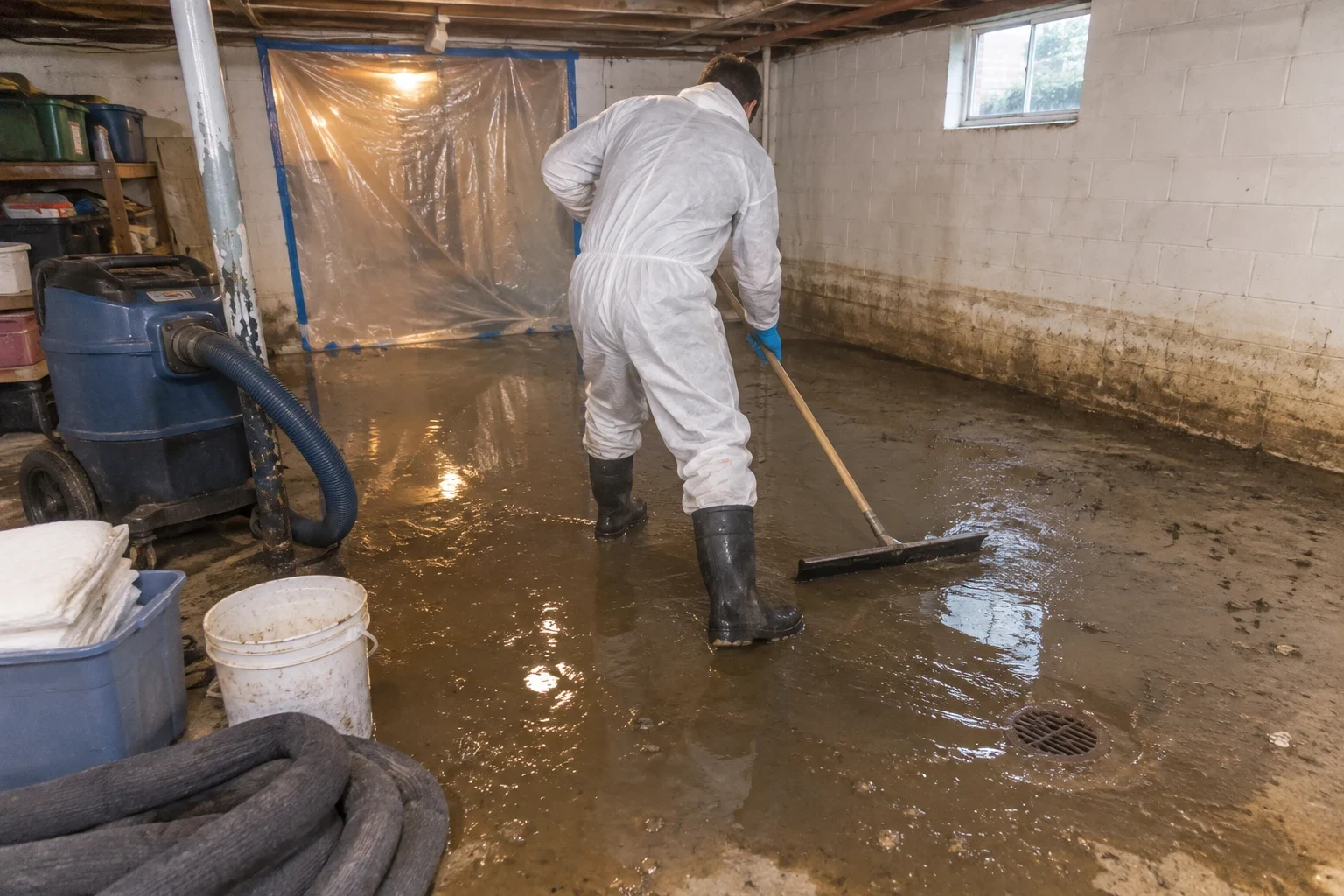
Sewage in your home is not a mop-and-bleach job. We pump out the waste, remove what soaked it up, disinfect every surface it touched and dry the structure. You get a clean, safe space and a straight answer on what can be saved.
What sewage cleanup covers
A sewage backup is the dirtiest kind of water damage. It carries bacteria, viruses and waste, and it soaks into anything porous it reaches. Carpet, pad, drywall and insulation that sat in it usually can't be cleaned well enough to keep. Hard surfaces like tile, concrete and sealed wood often can.
Our job is to sort those two groups out honestly. Saving a wet carpet looks cheaper on day one. But if contamination stays in the pad or the wall cavity, you pay later in odor, mold and a second tear-out. We'd rather spend a little more up front on removal so the fix lasts.
We respond around the clock, and our standard is on site in 60 mins or less. If the backup came with storm water, our flood cleanup crew handles both at once.
What the work includes
- Waste and water removal
- We pump and extract standing sewage with truck-mounted or portable units. Solids are bagged and hauled out in sealed containers, not tracked through your house.
- Containment
- We seal off the affected area with plastic sheeting and keep air moving away from the rest of your home. That keeps the smell and the germs where we're working.
- Tear-out of contaminated materials
- Carpet, pad, drywall up to a safe cut line and wet insulation come out. We photograph what we remove so you and your insurer can see why.
- Cleaning and disinfecting
- Every surface the water touched gets scrubbed and treated with an antimicrobial. That includes framing, subfloor, concrete and the bottoms of cabinets.
- Structural drying
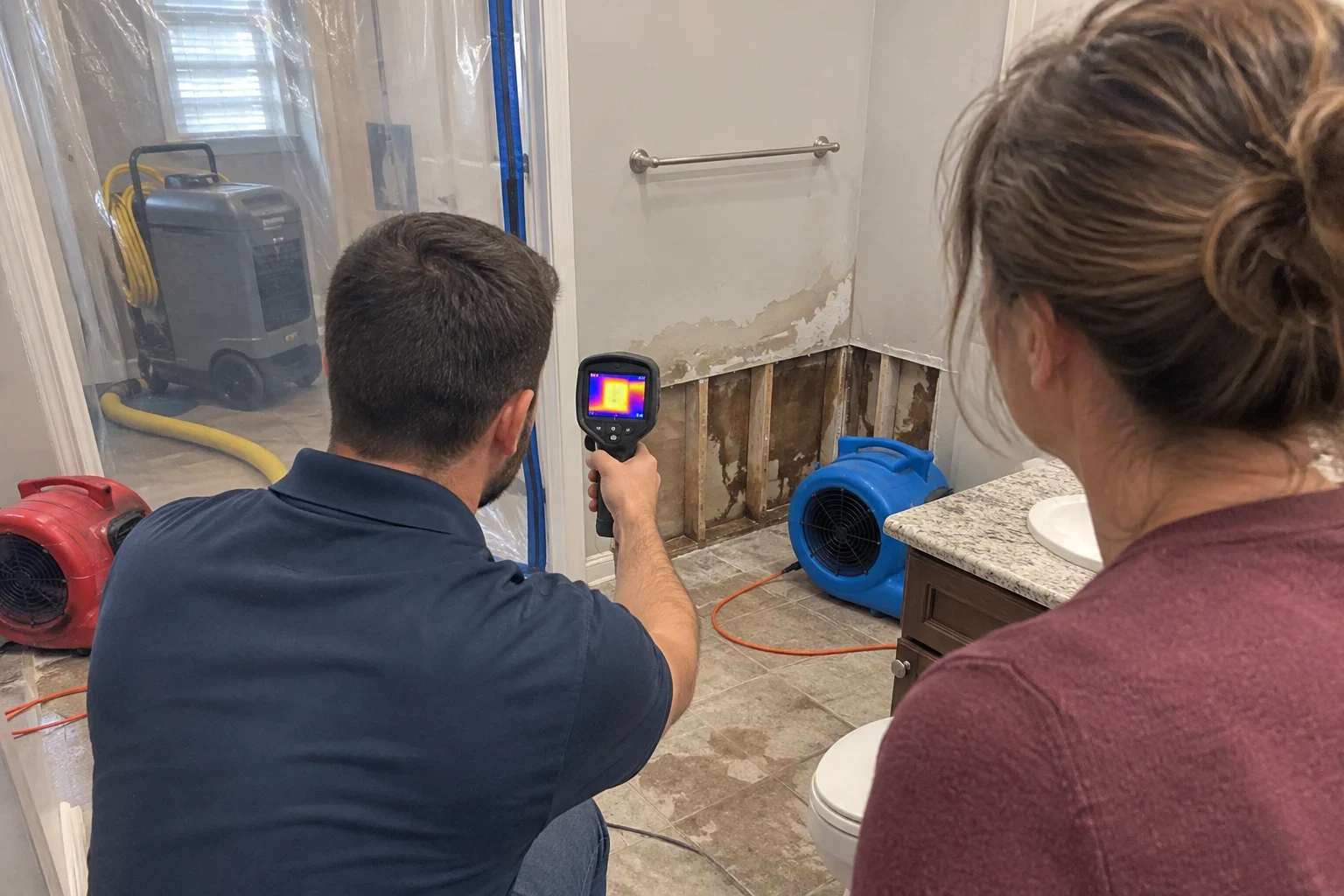
- We set air movers and dehumidifiers and check moisture readings each day until the materials are dry. Our drying and dehumidifying work keeps mold from following the cleanup.
- Odor control
- Once the source is gone and things are dry, we treat any lingering odor so it doesn't come back on the first humid day.
Signs you have a sewage problem
Water coming up from floor drains
Dark water rising from a basement drain or shower means the line is backing up. Stop running water in the house until it's checked.
Gurgling toilets and slow drains
Several fixtures draining slowly at once often points to a blockage in the main line. It's an early warning before a backup.
A sewer smell that won't clear
A rotten-egg or waste smell in a basement or crawlspace can mean a leak you can't see yet.
Stains or soft spots near the toilet
A wax ring or supply that's failed can leak dirty water into the subfloor for weeks before it shows.
Backups after heavy rain
Hard summer storms can overload older sewer lines and push water back into lower floors. Treat that water as contaminated even if it looks clear.
How a sewage cleanup day runs
- 1
Arrive and make it safe
We check for electrical hazards, shut off power to wet areas if needed and put on protective gear. Then we walk you through what we see.
- 2
Stop the spread and extract
We set up containment and pump out the standing water and waste. Getting it out fast limits how far it wicks into walls and floors.
- 3
Remove and document
We cut out the materials that can't be saved and take photos as we go. You get a clear list of what came out and why.
- 4
Clean, disinfect and dry
We scrub and treat every exposed surface, then set drying equipment. We return to take moisture readings until the space is dry.
- 5
Put it back
When testing says it's clean and dry, our repairs and rebuild crew replaces drywall, flooring and trim so the room is usable again.
What moves the cost
Every sewage job is priced on what we find, and we give you a written, line-item estimate before work goes past the emergency stage. The goal is to spend money where it keeps the problem from coming back, not on shortcuts you redo later. We work with most major insurance companies and can explain how a claim usually goes, though your adjuster makes the coverage call.
- How far it spread
- A backup that stays in a bathroom costs far less than one that runs across a finished basement. Square footage drives labor, equipment and disposal.
- What it soaked into
- Concrete and tile clean up. Carpet, drywall and insulation have to go, and replacing them adds to the total.
- How long it sat
- Sewage that sat for a day or two has wicked higher into walls and started to grow bacteria. That means more tear-out and longer drying.
- Access
- Crawlspaces and tight utility rooms take more time and gear than an open floor.
- Rebuild scope
- Putting back basic drywall is one cost. Matching flooring, cabinets or built-ins is another, and we price it separately so you can see each piece.
Sewage cleanup questions
Something not covered here? (804) 392-1073
Can I clean up a small sewage backup myself?
A small spill on tile or concrete, maybe, with gloves, boots and a proper disinfectant. Once it reaches carpet, drywall or anything porous, it's a different job. Those materials hold bacteria you can't see, and bleach on the surface doesn't reach it. We'd rather look and tell you it's minor than have you breathe it for months.
Is it safe to stay in the house?
Usually yes, if the affected area is sealed off and you keep kids and pets away from it. If the backup is large or in a main living space, it may make sense to stay elsewhere for a few days. We'll tell you plainly once we see it.
Does homeowners insurance cover sewage backup?
It depends on your policy. Many standard policies need a separate sewer or drain backup endorsement. We work with most major insurance companies, and our photos and moisture logs help your claim, but the adjuster decides what's covered.
Do you fix the sewer line too?
Our work is the cleanup inside your home and putting it back together. The line that caused the backup needs a plumber, and it should be cleared before we finish so it doesn't happen again during drying.
How long does sewage cleanup take?
Extraction and tear-out usually happen the first day. Drying often runs three to five days depending on the materials. Rebuild comes after, and its length depends on what has to be replaced.
Why not just save the carpet?
Carpet that sat in sewage holds contamination in the pad and backing. Cleaning it costs money now and often fails later with odor or mold. Replacing it is the choice that holds up, and insurers generally expect it.
Sewage in your home? Let's get it out.
We respond day or night across Bon Air, Midlothian and the surrounding area. We'll stop the spread, show you what has to go and give you a written plan before the big decisions.